INTRODUCTION
CAT aspirants rarely suffer from a shortage of study material.
The bigger problem is too many resources and too little completion.
A student may have: Five Quant books Three mock platforms Hundreds of YouTube videos Multiple Telegram folders Several PDFs
Yet still lack a structured preparation system.
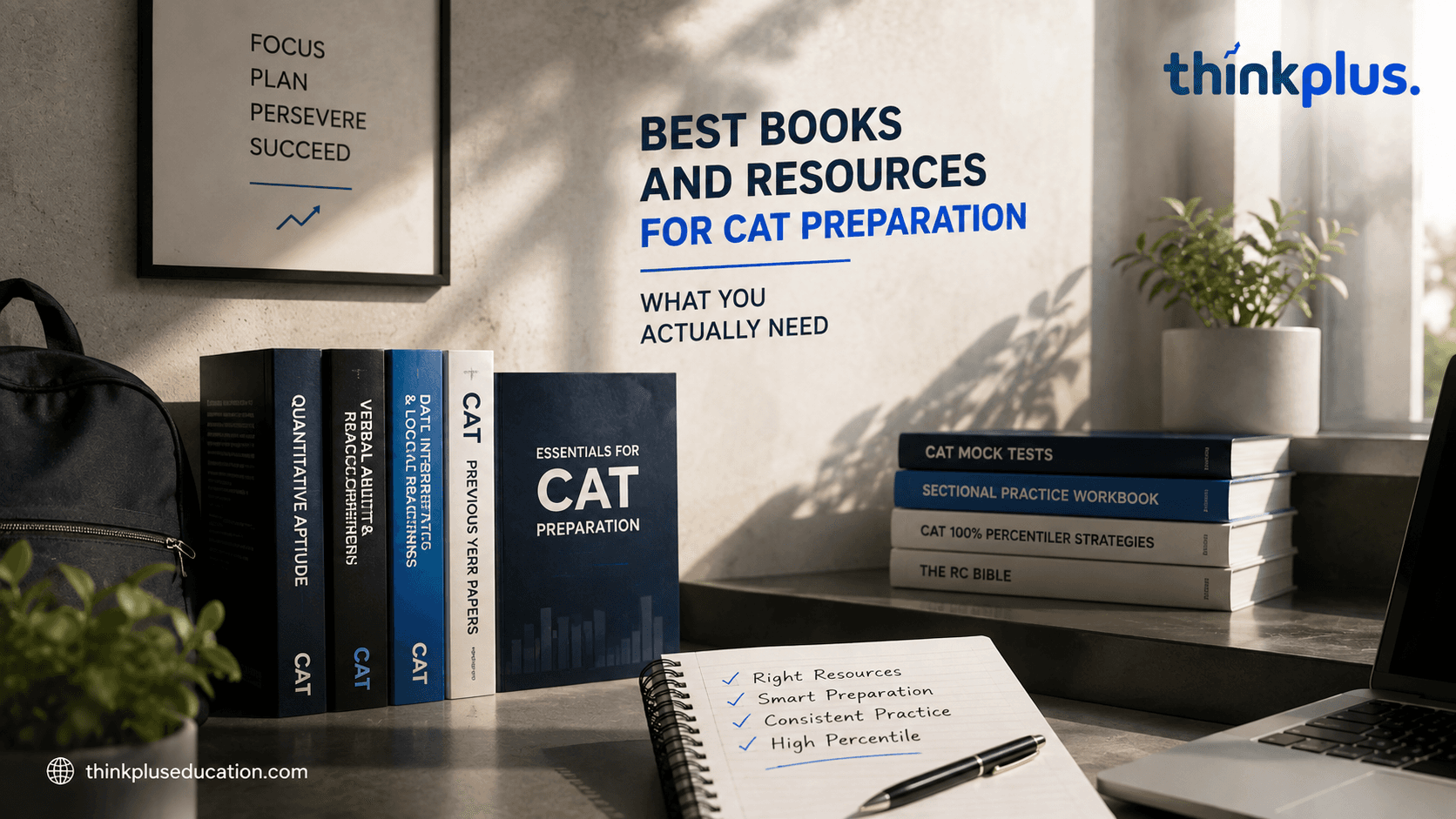
The ideal CAT resource stack is much smaller:
One concept source + one practice source + PYQs + mocks + personal revision notes
That is enough for most aspirants when used deeply.
QUANTITATIVE ABILITY RESOURCES
For QA, choose one structured source that explains concepts before moving into graded practice.
Popular CAT preparation ecosystems include books and materials from established aptitude publishers and coaching organisations.
Rather than buying everything, evaluate a Quant resource using five questions:
Many aspirants use well-known quantitative aptitude books by authors such as Arun Sharma, Nishit Sinha or institute materials from major coaching providers.
The specific brand matters less than how consistently you use it.
Do not change your Quant book every time you find a difficult chapter.
VARC RESOURCES
VARC requires both structured practice and broad reading.
For Reading Comprehension, use:
Useful reading categories: Economics Philosophy Science Psychology History Sociology Technology Culture
Do not read only topics you enjoy.
CAT passages often feel difficult because the subject is unfamiliar.
Your goal is to become comfortable reading outside your comfort zone.
For Verbal Ability, practise:
When analysing an answer, understand why the wrong choices fail.
DILR RESOURCES
DILR requires variety.
A single chapter-based book cannot fully prepare you for CAT's hybrid reasoning.
Use:
Create a DILR Set Notebook.
After solving a good set, write:
Do not record complete solutions unless necessary.
Record the learning.
PREVIOUS-YEAR PAPERS ARE NON-NEGOTIABLE
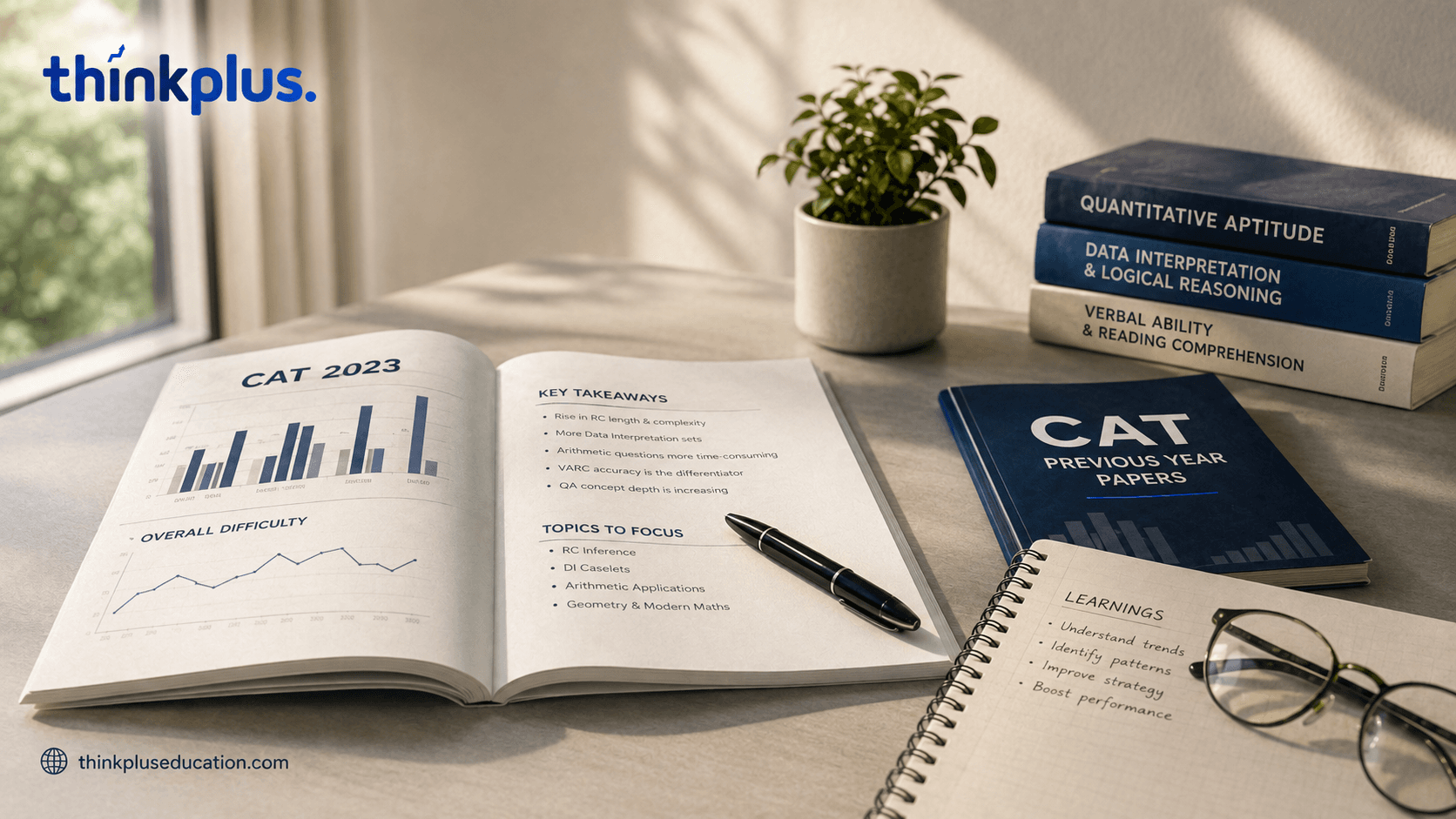
Every serious CAT aspirant should solve recent CAT papers.
PYQs show:
They help correct a common problem: preparing only from material that is easier or more predictable than CAT.
Use PYQs first as learning material and later as timed mocks.
MOCK TESTS
Mocks are your most important resource in the second half of preparation.
A strong mock platform should provide:
Do not buy a mock series only because toppers advertise it.
If possible, use more than one quality mock source later in preparation to avoid becoming too familiar with one test-maker's style.
But do not subscribe to five platforms and attempt only two tests from each.
Depth beats collection.
YOUR ERROR LOG
The most personalised CAT book is the one you create yourself.
Maintain an error log for: QA: Formula/concept mistakes Calculation errors Better methods
VARC: Why you chose the wrong option Inference errors Extreme-option traps
DILR: Bad set selection Missed inference Poor representation
Review this every week.
Over time, the notebook becomes a map of your recurring weaknesses.
FORMULA SHEET
Keep a compact QA revision sheet containing:
Do not create a 200-page revision document.
The final revision sheet should be short enough to revise repeatedly.
FREE VS PAID RESOURCES
Free resources can be sufficient for a disciplined student.
Paid programmes can help with:
Ask: “What problem am I paying to solve?”
If your problem is inconsistency, another question bank may not help.
If your problem is concept clarity, a structured course might.
RESOURCE HOPPING
Resource hopping often begins with a difficult question.
A student struggles with Algebra and immediately thinks: “This teacher is not good.” “This book is not enough.” “I need another course.”
Sometimes the real issue is simply that Algebra requires repeated effort.
Before switching, ask whether you have: Completed the concept Solved enough basic problems Reviewed mistakes Retried the topic
Difficulty is not proof that the resource has failed.
THE IDEAL CAT RESOURCE SYSTEM
Keep it simple:
QA Concept Source QA Practice Source VARC Reading + Sectionals DILR Set Bank CAT PYQs Mock Series Error Log Revision Notes
That is enough.
CONCLUSION
The best CAT resource is not the most famous book or the largest course.
It is the resource you use consistently, analyse deeply and revise repeatedly.
Avoid collecting material as a substitute for studying.
Remember:
A completed good resource is more valuable than five perfect resources left unfinished.
Editorial Reference Basis: Resource recommendations are general preparation guidance; candidates should use the official CAT website for exam rules and dates.
Talk to a Thinkplus counsellor and turn this article into a realistic preparation plan.