INTRODUCTION
The Common Admission Test is not an examination that rewards only knowledge. It rewards the ability to think clearly under time pressure, choose the right questions and maintain accuracy when the paper becomes unpredictable.
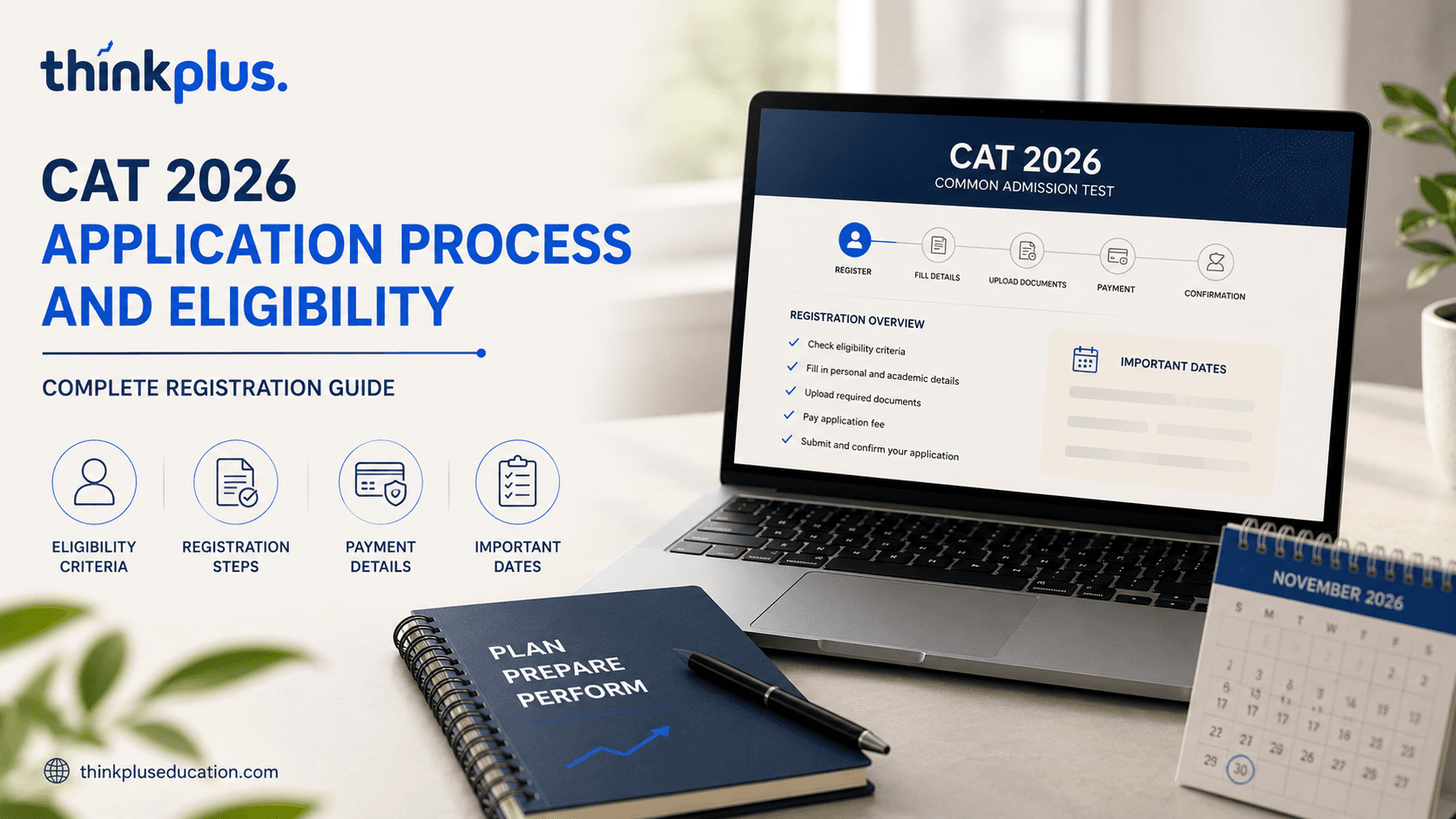
For CAT 2026, the official examination date is November 29, 2026. Registration opened on August 3 and is scheduled to close on September 15, 2026. CAT is conducted as a computer-based test for admission to postgraduate and fellow management programmes at the IIMs, while several non-IIM institutions also use CAT scores.
A strong CAT preparation strategy should therefore do more than help you finish chapters. It should gradually convert concepts into timed performance.
START WITH A DIAGNOSTIC TEST
Before preparing topic by topic, attempt one recent CAT paper or a good diagnostic mock.
Do not worry about the percentile.
The purpose is to identify:
A diagnostic test gives you a starting point.
After the test, classify each section as: Strong, Average or Needs Immediate Work.
This simple classification makes your study plan personal instead of generic.
BUILD QUANTITATIVE ABILITY IN LAYERS
For most CAT aspirants, Quant becomes manageable when preparation is organised into topic families.
Begin with Arithmetic:
Then move to Algebra:
Follow this with Geometry, Number System and other topics observed in recent CAT papers.
The right learning order is:
Concept → Basic Practice → CAT-Level Questions → Timed Sets → Revision
Do not rush directly to shortcuts. A shortcut is useful only when you understand why it works.
MAKE VARC A DAILY HABIT
VARC is often misunderstood as an English-language test. CAT does not primarily test whether you know difficult vocabulary. It tests whether you can understand arguments, identify assumptions, interpret tone and distinguish close answer choices.
Read every day.
Choose articles and essays from different areas:
After reading an article, ask: What is the central claim? What is the author's purpose? Where does the argument change direction? Which ideas are facts and which are opinions?
For Reading Comprehension, spend as much time analysing wrong options as checking the correct answer.
In CAT, many incorrect options are not completely absurd. They are attractive because they are partly true but not fully supported.
BUILD DILR THROUGH SET SELECTION
DILR is difficult to prepare through a fixed chapter list because CAT can combine data and logic in unfamiliar ways.
Practise a wide variety of sets:
But the most important DILR skill is not simply solving sets.
It is choosing the right set first.
During practice, spend the opening minutes scanning a sectional test and deciding which sets appear:
This habit can dramatically improve your score.
TAKE SECTIONAL TESTS BEFORE FULL MOCKS
Many aspirants either avoid mocks for too long or start taking full mocks before they understand the sections.
Use this progression:
Topic Tests → Mixed Practice → Sectional Tests → Full-Length Mocks
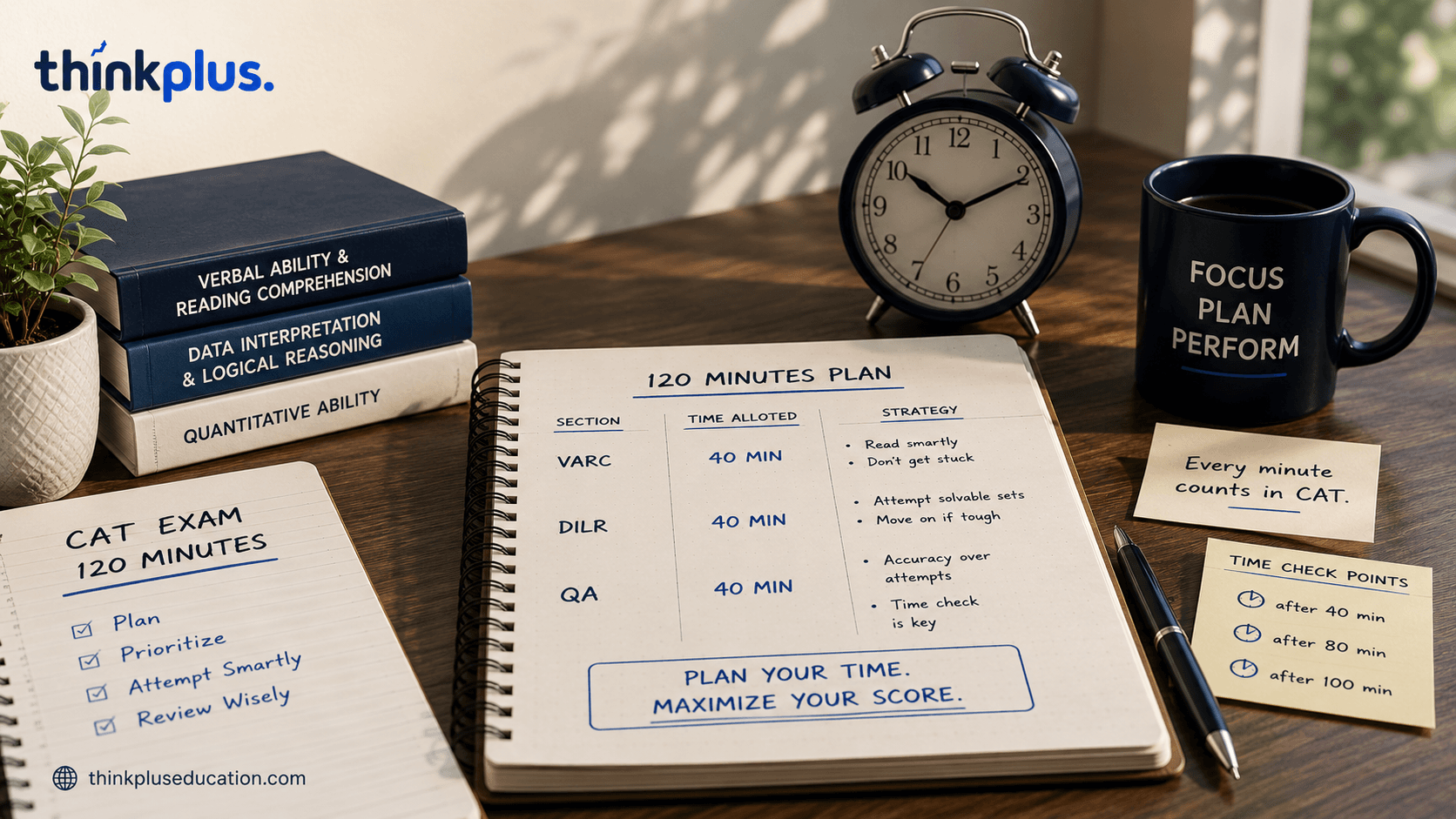
Sectional tests teach you how to use 40 minutes effectively.
They also expose problems that chapter-wise practice hides.
For example, you may be good at Arithmetic when practising it alone but still perform poorly in QA because you spend too long deciding what to attempt.
ANALYSE EVERY MOCK
The purpose of a mock is not merely to produce a percentile.
After each mock, separate your errors into:
Then identify the questions you could have solved but never reached.
These are often more important than the hardest questions in the paper.
Use an error log and review it every week.
A useful principle is:
One deeply analysed mock can teach more than three casually attempted mocks.
BUILD YOUR OWN ATTEMPT STRATEGY
Do not blindly copy the number of attempts of a 99-percentiler.
CAT papers and slots differ in difficulty, and students differ in strengths.
Instead, track:
Your target should be to maximise net marks, not simply attempts.
PREPARE FOR WHAT COMES AFTER CAT
CAT is an important component of MBA admission, but individual IIMs use their own admission criteria.
Depending on the institute, shortlisting and final selection may consider factors such as:
Therefore, do not assume that the CAT percentile alone completes the journey.
CONCLUSION
To crack CAT, you need more than long study hours.
You need strong fundamentals, intelligent question selection, consistent mock analysis and emotional control.
Build concepts first. Increase testing gradually. Review every important mistake. Learn to skip questions without panic.
CAT preparation becomes much more manageable when every test answers one question:
What exactly should I improve before my next test?
That is how preparation turns into performance.
Editorial Reference Basis: Official CAT 2026 Information Bulletin and official CAT website; recent CAT paper trends used only for preparation guidance.
Talk to a Thinkplus counsellor and turn this article into a realistic preparation plan.