Why Previous-Year Papers Matter
Previous-year papers are among the most valuable tools in IPMAT preparation because they show how concepts are converted into actual examination questions. A syllabus tells you what may be tested. A past paper shows depth, difficulty, question length, topic combinations, time pressure and distractor quality. They also help students avoid preparing only comfortable topics.
Understanding the Current Structure First For the 2026 IIM Indore cycle, the official examination structure continued with three sections: QA-MCQ, QA-Short Answer and Verbal Ability, each receiving 40 minutes. That structure makes previous papers particularly useful because students need to judge each section separately rather than relying solely on a strong overall score. IIM Indore's selection process required positive raw scores and institute-determined minimum marks in all three sections before candidates could progress further. In practical terms: neglecting an entire section is dangerous.
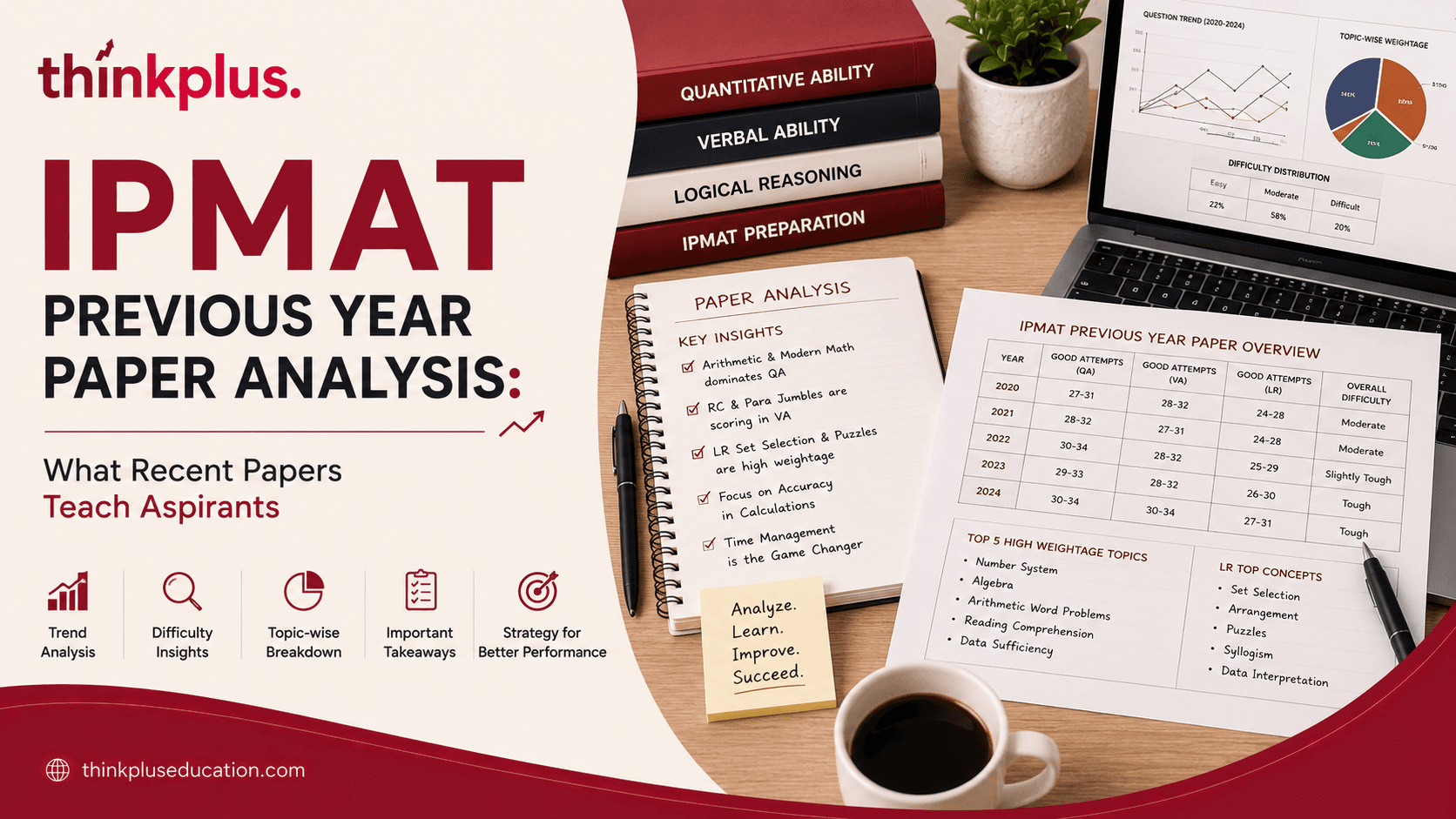
What the 2024 Paper Suggested Career Launcher's analysis described IPMAT Indore 2024 as moderate overall and emphasised the importance of conceptual understanding, mock practice and time management. The broader lesson is important. Students sometimes expect IPMAT papers to be either easy or hard, but aptitude exams are usually mixed. Even in a moderate paper, a handful of unusually difficult questions can consume disproportionate amounts of time. The goal should therefore be to identify scoreable questions rapidly rather than attempt every problem sequentially.
What Changed in 2025? Independent analyses of IPMAT Indore 2025 reported a noticeable contrast between sections. MBAUniverse classified the QA Short Answer section as moderate and QA-MCQ as difficult, while describing Verbal Ability as moderate but lengthy. Another analysis similarly described Verbal Ability as easy-to-moderate but time-consuming, highlighting the importance of reading efficiency rather than merely knowing vocabulary.
Lesson 1: Quant Preparation Must Go Beyond Basic Arithmetic If you prepare Quant only through elementary arithmetic, a concept-heavy paper can become difficult.
Lesson 2: Easy Verbal Does Not Automatically Mean High Score A lengthy Verbal section can create pressure even when individual questions are not conceptually difficult. Reading speed without comprehension does not help. Practise processing passages accurately within a limited time.
What Did the 2026 Paper Indicate? Post-exam analyses of the May 2026 IPMAT Indore paper generally described the overall examination as moderate, although assessments of individual sections varied among coaching organisations and student reactions. This is why candidates should be cautious with unofficial expected cut-offs immediately after an examination. Difficulty assessments are useful for understanding trends, but official admissions decisions depend on the institute's actual selection process.
The Most Important Multi-Year Trend The biggest lesson from recent papers is not that one particular chapter always dominates. It is that flexibility matters. Students need enough breadth to handle shifts in topic distribution. If a candidate prepares only arithmetic because it felt comfortable, vocabulary because it produced quick marks, or a fixed set of repeated puzzle types, a change in the paper can create serious problems. Build a broad base first and specialise later.
How to Use Previous-Year Papers Correctly Do not immediately solve every old paper casually. Use papers in three different ways. Stage 1: Topic Extraction - During early preparation, identify which concepts appear. This helps create your syllabus priority list. Stage 2: Sectional Practice - Take Quant and Verbal portions separately under appropriate time limits. Analyse accuracy and question selection. Stage 3: Full Simulation - Closer to the examination, attempt entire past papers under realistic conditions. No pauses, no checking formulas midway, no casual breaks.
How to Analyse a Previous Paper
Don't Memorise Past Papers Previous-year papers should teach patterns-not create dependence on repetition. Entrance examinations can change emphasis from year to year. Use old questions to develop mathematical reasoning, reading ability and decision-making.
Conclusion
A thoughtful IPMAT previous year paper analysis can save months of inefficient preparation. Recent papers show why aspirants should expect variation rather than build their entire strategy around one year's difficulty level. Study concepts broadly, practise past papers under time limits, analyse every mistake and pay special attention to question selection. The aim is not to predict the exact next paper. It is to become strong enough that the exact paper matters less.
Talk to a Thinkplus counsellor and turn this article into a realistic preparation plan.