Can You Prepare for IPMAT in Six Months?
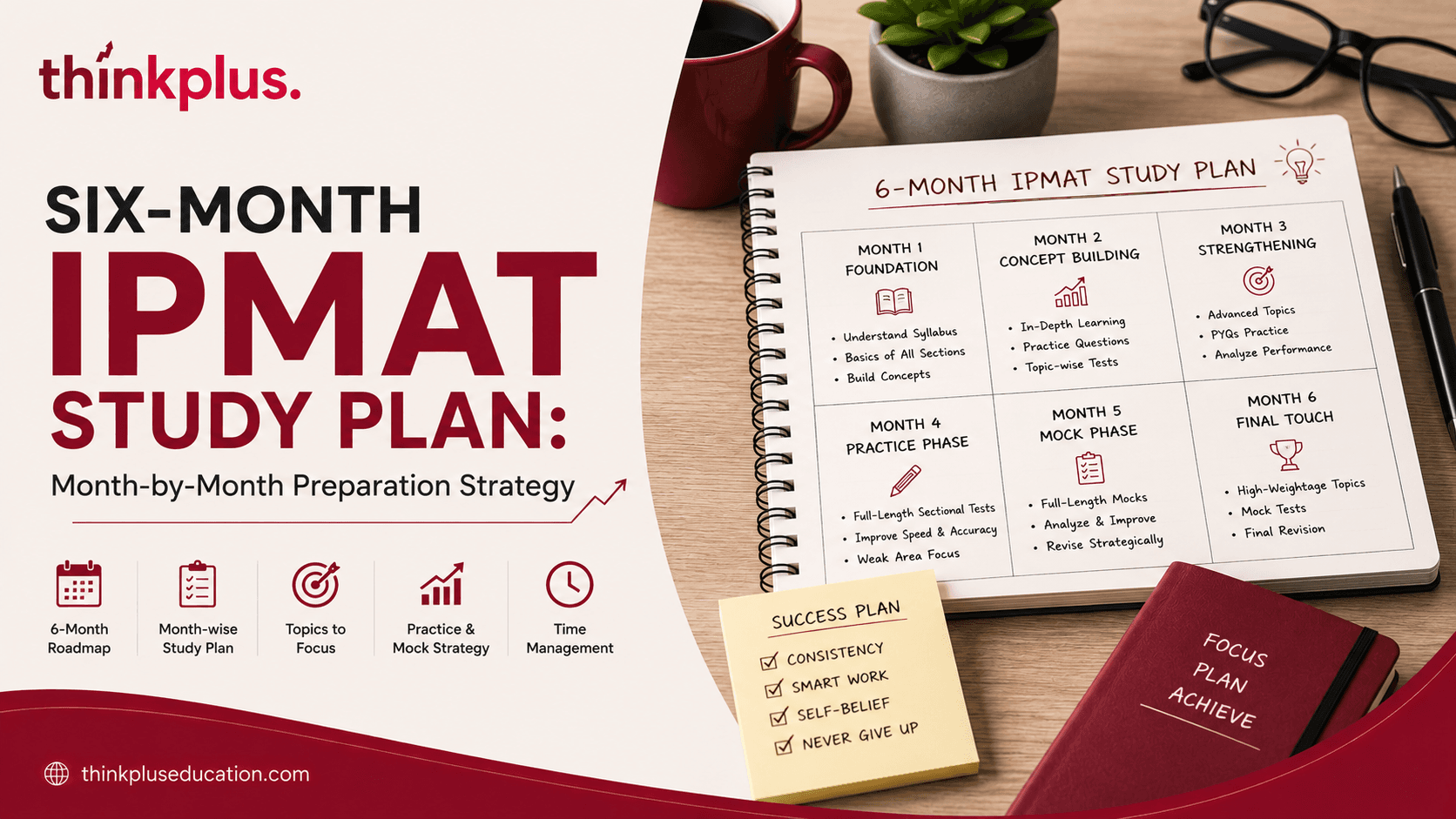
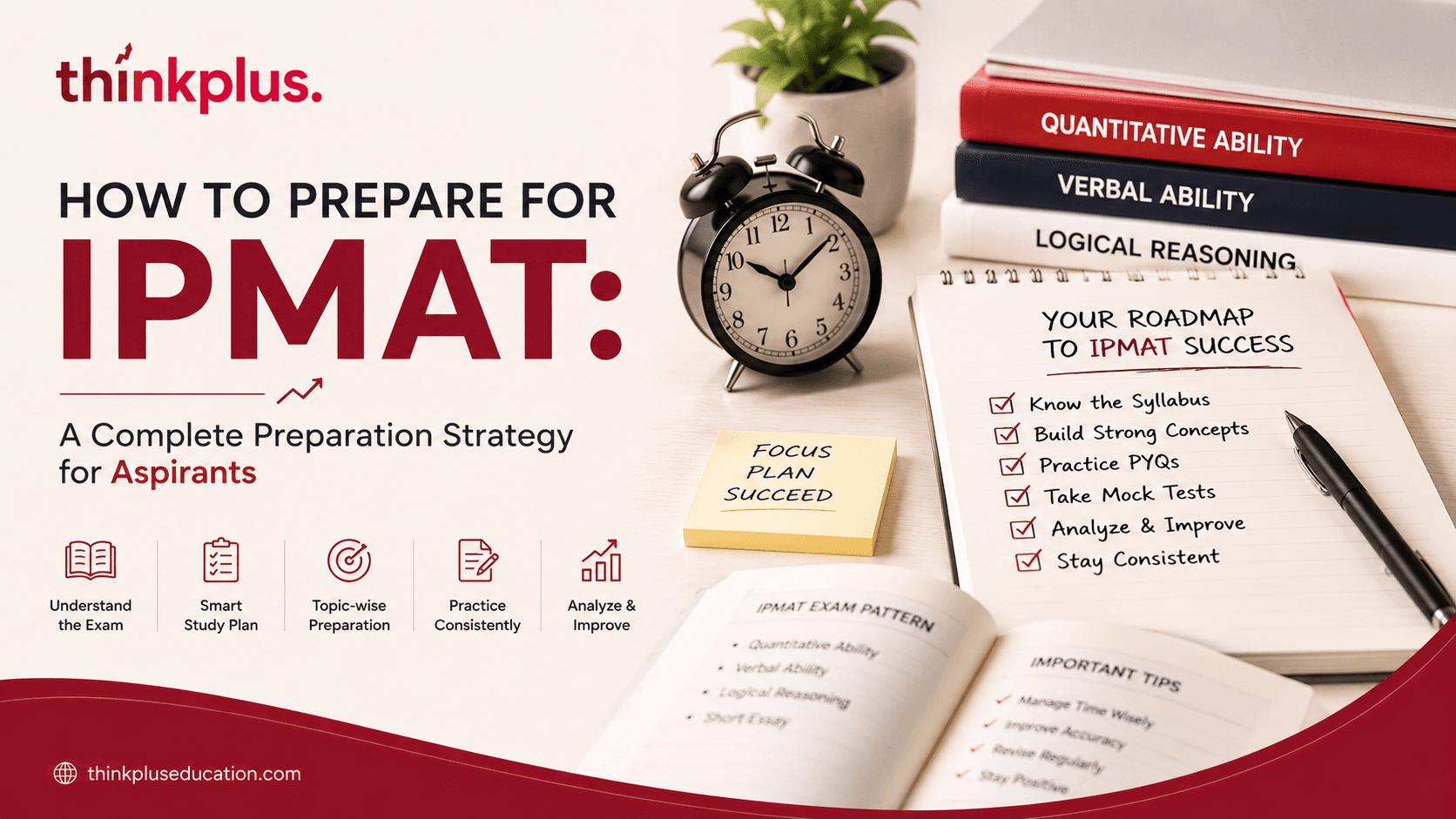
Six months is a meaningful preparation window if used systematically. The mistake many students make is treating all six months identically.
Early preparation should focus on learning. Middle preparation should focus on mixed practice. Final preparation should revolve around mocks, previous-year papers and revision.
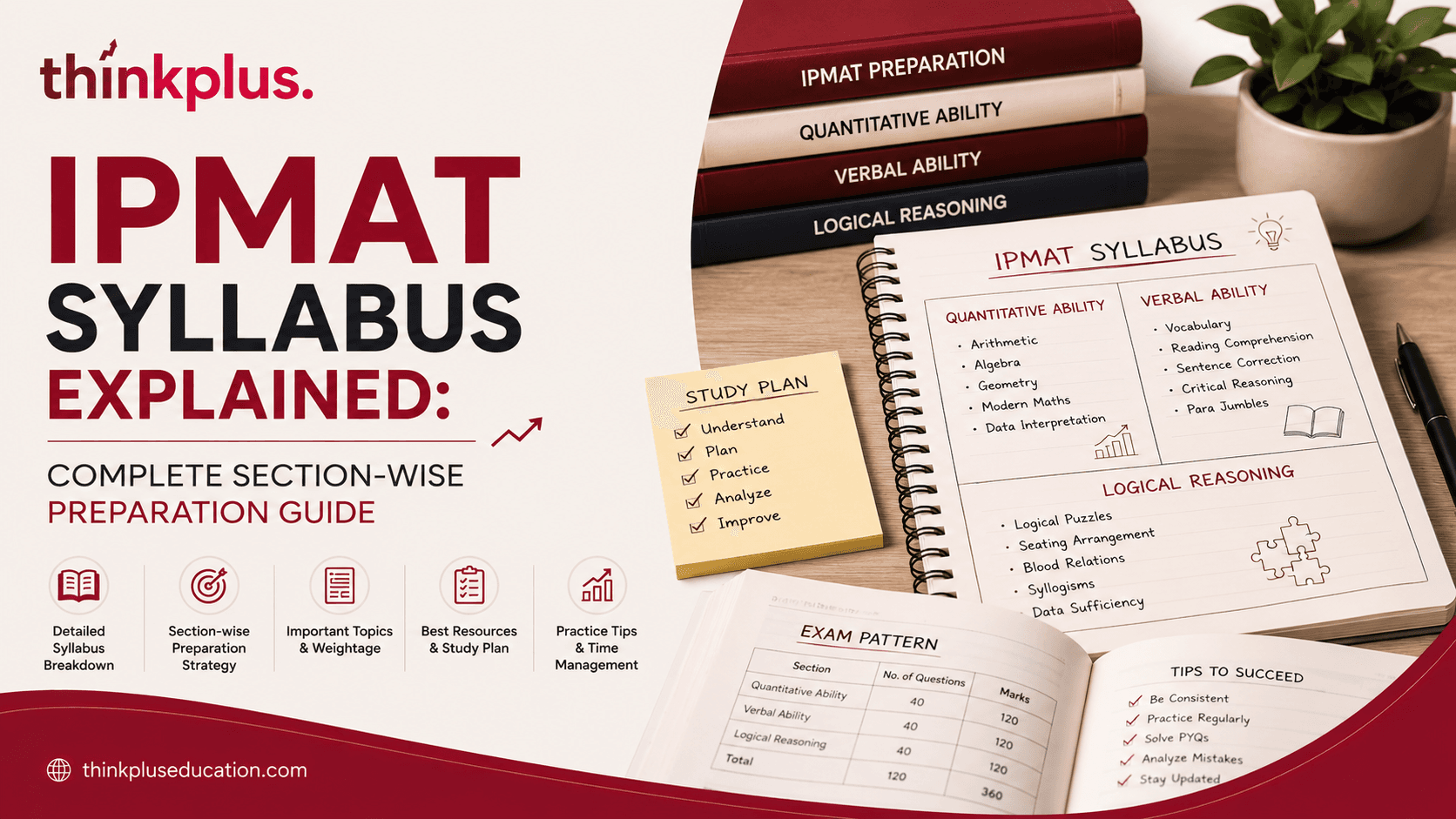
Because IPM entrance tests differ, candidates should build their timetable around all examinations they plan to write. IIM Indore's latest official pattern uses three 40-minute sections, while Rohtak tests Quantitative Ability, Logical Reasoning and Verbal Ability. JIPMAT additionally includes Data Interpretation.
Here is a practical six-month roadmap.
Month 1: Build the Foundation
The objective of the first month is not speed. It is clarity.
- Percentages
- Ratios
- Averages
- Profit and loss
- Simple and compound interest
Alongside Quant, begin reading for at least 30 minutes every day.
Choose editorials, business articles, science writing, history, social issues and essays. Variety matters because unfamiliar topics often make reading comprehension difficult.
Students targeting Rohtak or JIPMAT should also start basic Logical Reasoning. At the end of Month 1, take a diagnostic sectional test.
Month 2: Expand the Syllabus
- Time and work
- Time-speed-distance
- Mixtures
- Number systems
- Linear equations
- Quadratic equations
- Indices and surds
For English, add structured practice in grammar, vocabulary and para-based questions.
Begin an error notebook. Whenever a mistake occurs, write: What went wrong? Why did it go wrong? What method should have been used? How can the error be prevented?
This turns practice into improvement.
Month 3: Strengthen Algebra and Advanced Areas
By Month 3, begin more demanding Quant topics.
- Inequalities
- Modulus
- Functions
- Logarithms
- Progressions
- Geometry
- Mensuration
At this stage, topic tests should become timed.
For Verbal Ability, increase RC frequency. Instead of merely checking whether your answers are correct, explain why every incorrect option is wrong.
Students preparing for JIPMAT should practise DI sets because NTA's latest official paper allocates 33 questions to the combined Data Interpretation and Logical Reasoning section.
Month 4: Begin Serious Sectional Testing
Month 4 should mark the transition from studying chapters to taking an aptitude examination.
Introduce two or three sectional tests each week.
- Accuracy
- Attempts
- Average time
- Questions left unseen
- Easy questions missed
- Negative marks
The purpose of sectional tests is to find the score you can produce under pressure, not the score you can obtain when given unlimited time.
For IIM Indore aspirants, sectional timing is especially important because the latest official structure gives each section 40 minutes and requires candidates to answer sections in a pre-specified order.
Month 5: Full Mocks and Previous-Year Papers
Start taking full-length mocks regularly.
A good mock routine has two parts: Test day - Attempt the exam seriously. Analysis day - Spend substantial time examining the paper.
- Questions that should have been attempted
- Questions that should have been skipped
- Incorrect guesses
- Slow calculations
- Conceptual gaps
- Panic-driven mistakes
You may discover that your biggest problem is not knowledge but question selection.
Use previous-year papers as realistic benchmarks. Independent analysis of IPMAT Indore 2025 described the QA-MCQ portion as difficult while the Verbal section was moderate but lengthy. That is exactly why preparation must include both difficulty management and speed.
Month 6: Revision and Exam Simulation
Do not spend the final month continuously learning new chapters.
- Revising formulas and concepts
- Re-solving errors
- Attempting mocks
- Practising previous papers
- Improving strategy
- Sleeping properly
Create short revision sheets for Quant. For Verbal, continue daily reading rather than suddenly stopping it.
During mocks, reproduce the actual examination environment. Avoid phone breaks, casual pauses or unnecessary interruptions.
A Practical Daily Timetable
- 60-75 minutes: Quant concepts and problems
- 30-40 minutes: Reading/RC
- 30 minutes: LR/DI or Verbal practice
- 20-30 minutes: Revision/error log
During weekends, add a sectional test or mock. The exact number of hours matters less than whether those hours are genuinely focused.
Balancing Board Exams and IPMAT
Do not treat school preparation and IPMAT as enemies.
Board mathematics strengthens fundamental concepts, while regular English reading benefits both academics and aptitude preparation.
During board-heavy weeks, reduce IPMAT volume but preserve continuity. Even 30 minutes of reading plus a short Quant revision session prevents complete loss of momentum.
Conclusion
The best six-month IPMAT study plan changes as your preparation develops.
Months 1-2 build foundations. Months 3-4 develop application. Months 5-6 convert knowledge into test performance.
Avoid the temptation to measure preparation by the number of hours studied or chapters completed.
Measure it by a better question: Am I making fewer mistakes and making better decisions than I was one month ago? If the answer is yes, your preparation is moving in the right direction.