Understanding the IPMAT Syllabus
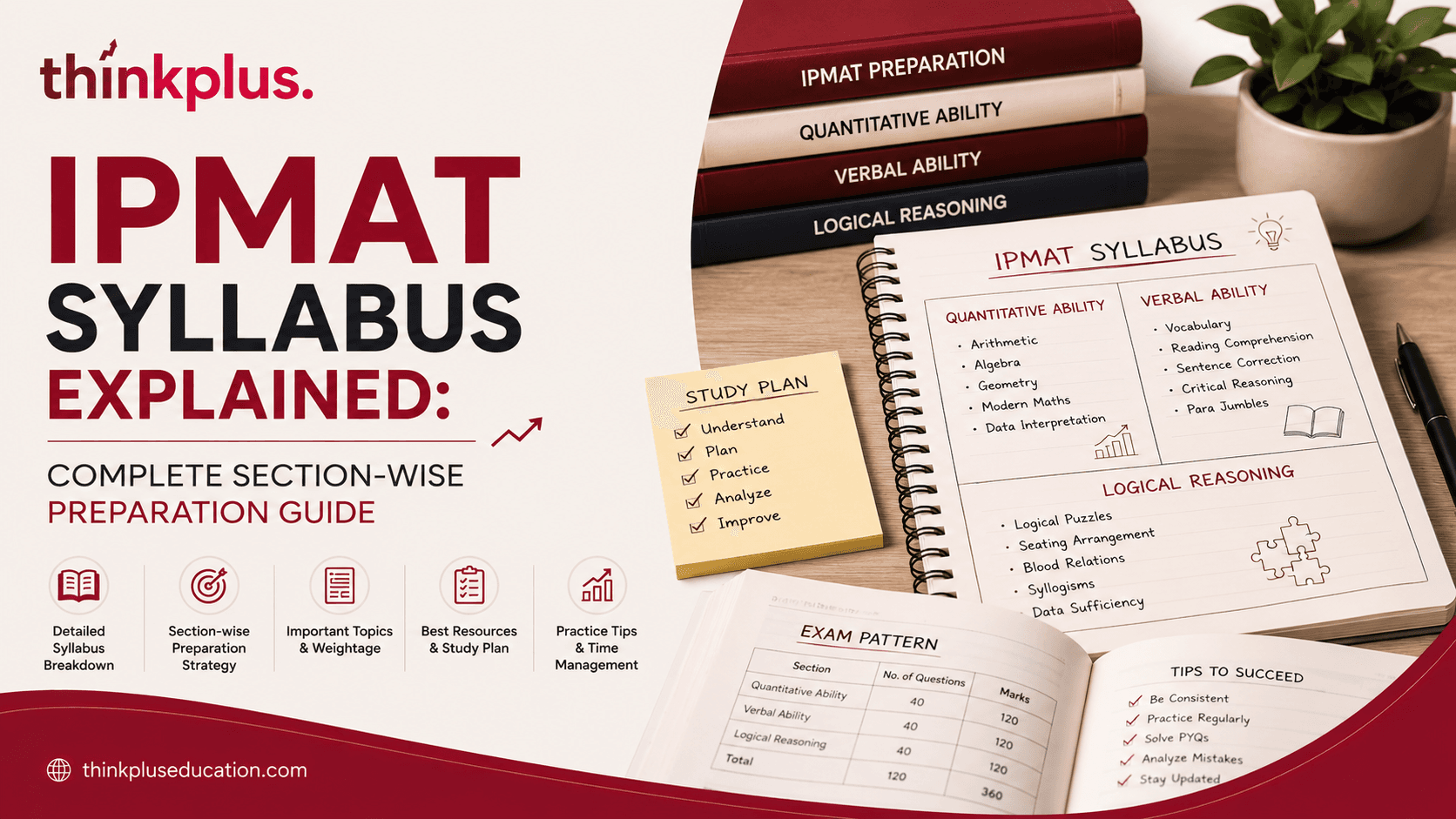
One of the most searched questions among beginners is: "What is the IPMAT syllabus?" The answer requires some explanation because different IPM entrance examinations follow different structures. IIM Indore's official 2026 admission document identifies three test sections-Quantitative Ability MCQ, Quantitative Ability Short Answer and Verbal Ability-but does not provide a detailed chapter-by-chapter mathematics syllabus in that admission procedure. JIPMAT is more explicit. NTA's 2026 bulletin states that its Quantitative Aptitude questions test mathematical concepts up to Class 10, while the other sections assess data interpretation, logical reasoning, basic English understanding and reading comprehension. For IIM Indore, aspirants therefore commonly combine the official pattern with previous-year papers to understand the practical topic range.
Quantitative Ability Quantitative Ability should be divided into major topic families rather than approached as an unstructured collection of formulas. Arithmetic
Verbal Ability and Reading Comprehension Verbal preparation is much broader than vocabulary. Reading Comprehension
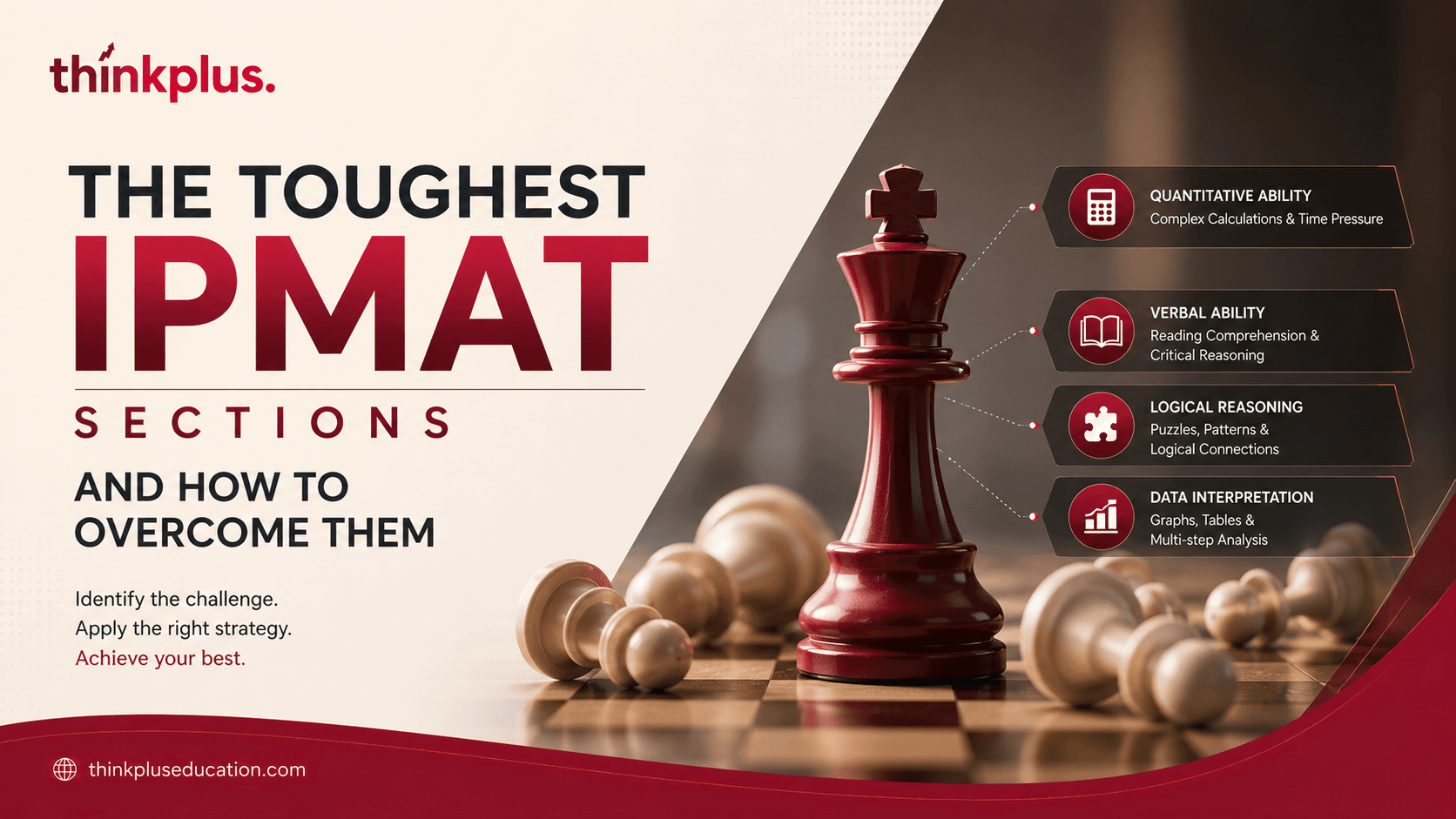
Logical Reasoning Logical Reasoning is particularly important for IIM Rohtak and JIPMAT. IIM Rohtak's 2026 IPM Aptitude Test had Logical Reasoning as one of its three 40-question areas.
Data Interpretation For JIPMAT, Data Interpretation is combined with Logical Reasoning.
How Should You Prioritise the Syllabus? Do not assign equal time to every chapter. Classify topics into: Priority A - Frequently encountered and currently weak; Priority B - Frequently encountered and reasonably strong; Priority C - Lower-return or already mastered areas. Priority A deserves the greatest attention. Also avoid completing the entire syllabus before taking tests. Start topic and sectional tests while learning so that you discover weaknesses early.
IPMAT Indore vs JIPMAT: One Important Difference JIPMAT's official 2026 syllabus specifically placed Quantitative Aptitude at concepts up to Class 10 mathematics. Candidates should not assume that this automatically defines the preparation level required for every other IPM aptitude examination. Previous-year IPMAT Indore papers should be analysed separately.
Conclusion
A good IPMAT syllabus preparation strategy is not simply a checklist of chapters. Students need three levels of mastery: Conceptual knowledge -> Question-solving ability -> Timed performance. Finish high-priority concepts first, practise them in mixed sets and continuously revisit weak areas through mocks. The syllabus may tell you what to study. Your preparation strategy determines how effectively you can use that knowledge on exam day.
Talk to a Thinkplus counsellor and turn this article into a realistic preparation plan.